

What’s next for AlphaFold: A conversation with a Google DeepMind Nobel laureate
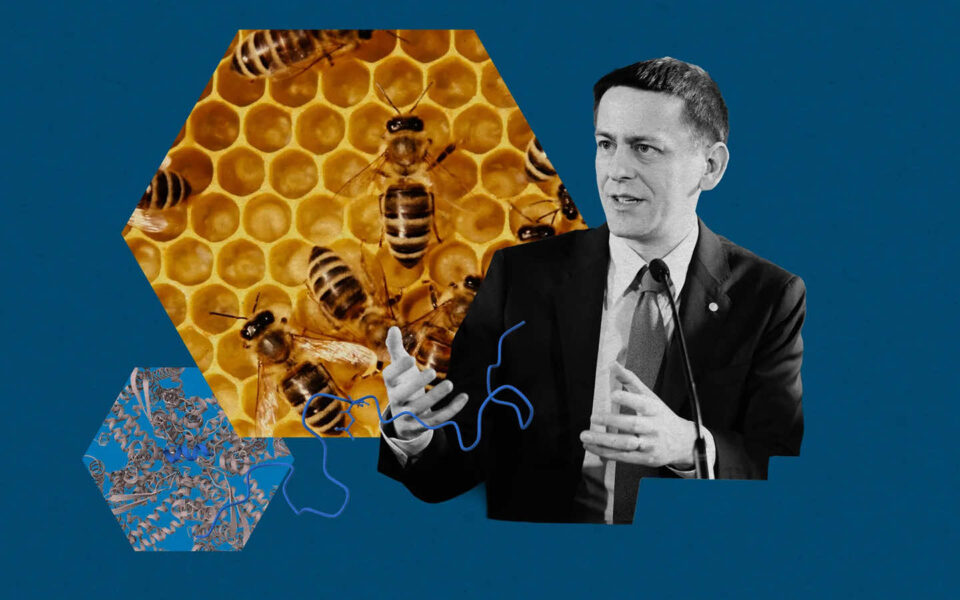
In 2017, fresh off a PhD on theoretical chemistry, John Jumper heard rumors that Google DeepMind had moved on from building AI that played games with superhuman skill and was starting up a secret project to predict the structures of proteins. He applied for a job.
Just three years later, Jumper celebrated a stunning win that few had seen coming. With CEO Demis Hassabis, he had co-led the development of an AI system called AlphaFold 2 that was able to predict the structures of proteins to within the width of an atom, matching the accuracy of painstaking techniques used in the lab, and doing it many times faster—returning results in hours instead of months.
AlphaFold 2 had cracked a 50-year-old grand challenge in biology. “This is the reason I started DeepMind,” Hassabis told me a few years ago. “In fact, it’s why I’ve worked my whole career in AI.” In 2024, Jumper and Hassabis shared a Nobel Prize in chemistry.
It was five years ago this week that AlphaFold 2’s debut took scientists by surprise. Now that the hype has died down, what impact has AlphaFold really had? How are scientists using it? And what’s next? I talked to Jumper (as well as a few other scientists) to find out…
…Last month, the startup Genesis Molecular AI released another structure prediction model called Pearl, which the firm claims is more accurate than AlphaFold 3 for certain queries that are important for drug development. Pearl is interactive, so that drug developers can feed any additional data they may have to the model to guide its predictions.
AlphaFold was a major leap, but there’s more to do, says Evan Feinberg, Genesis Molecular AI’s CEO: “We’re still fundamentally innovating, just with a better starting point than before.”
Genesis Molecular AI is pushing margins of error down from less than two angstroms, the de facto industry standard set by AlphaFold, to less than one angstrom—one 10-millionth of a millimeter, or the width of a single hydrogen atom.
“Small errors can be catastrophic for predicting how well a drug will actually bind to its target,” says Michael LeVine, vice president of modeling and simulation at the firm. That’s because chemical forces that interact at one angstrom can stop doing so at two. “It can go from ‘They will never interact’ to ‘They will,’” he says.
With so much activity in this space, how soon should we expect new types of drugs to hit the market? Jumper is pragmatic. Protein structure prediction is just one step of many, he says: “This was not the only problem in biology. It’s not like we were one protein structure away from curing any diseases.”